
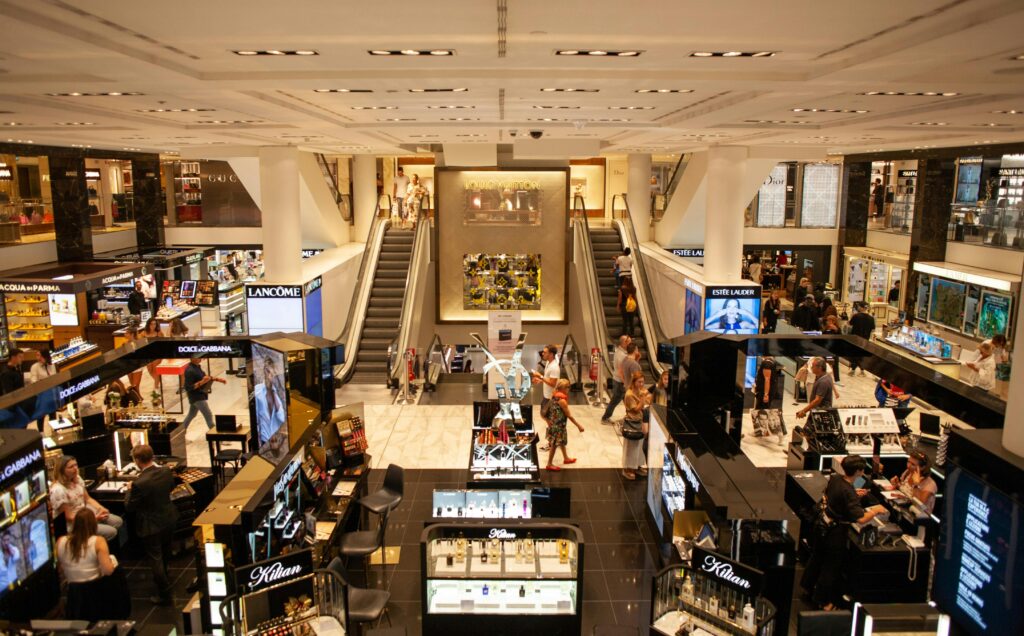
Brand awareness is the foundation of any successful marketing strategy. Without it, even the best product or service risks going unnoticed. Measuring brand awareness matters more than ever, especially in highly competitive retail settings like malls, kiosks, or pop-up booths. These physical spaces serve as both sales touchpoints and brand-building opportunities. Understanding how to measure brand awareness in these contexts helps businesses refine their strategies, maximize exposure, and create memorable customer experiences.
Unlike digital advertising, where clicks, impressions, and conversions are easily tracked, physical retail encounters require creative, data-driven, and sometimes unconventional methods of measurement. By combining qualitative observations with quantitative metrics, businesses can give a bigger picture of how customers perceive and remember their brand.
What Is Brand Awareness?
Brand awareness refers to the extent to which consumers recognize, recall, and understand a brand when they encounter it. At its core, it is about whether people know who you are, what you offer, and how you are different from competitors. In the context of retail, awareness involves connecting with the brand’s values, messaging, and overall identity.
There are two primary dimensions of brand awareness:
- Brand Recognition: This is the ability of consumers to identify a brand when they see its visual or verbal cues. Spotting a familiar logo at a mall kiosk or hearing a brand name in conversation. Recognition is the first step in building trust and credibility.
- Brand Recall: This goes deeper than recognition, as it measures whether consumers can remember a brand unprompted. If a shopper is later asked to name a company offering skincare products and recalls the brand they saw at a retail booth.
The Importance of Measuring Brand Awareness
Why It Matters
Brand awareness serves as the foundation of customer acquisition and loyalty. At a mall kiosk or retail booth, consumers are often introduced to a brand for the first time. How they perceive that brand—whether positively, neutrally, or negatively—can heavily influence their purchasing decisions both in the moment and in the future.
The Distinct Setting of Kiosks and Booths
Unlike traditional retail stores, kiosks and booths are temporary, high-traffic hubs that rely heavily on footfall. This environment creates both opportunities and challenges:
- High visibility: Shoppers pass by naturally, providing exposure to a broad audience.
- Brief interactions: Many customers spend only seconds engaging, which makes capturing attention and impressions invaluable.
- Direct human contact: Sales associates can shape brand perception in ways that signage or product displays alone cannot.
Given these dynamics, businesses must carefully measure awareness to understand not just how many people saw their booth, but also how deeply the brand left an impression.
Pre-Event Benchmarks and Goal Setting
Setting Clear Objectives
Brands should decide what they want to achieve at the kiosk or booth. Objectives may include:
- Increasing recognition among a new demographic.
- Generating sign-ups for a loyalty program.
- Driving traffic to a physical store or e-commerce site.
- Encouraging social media follows or shares.
Pre-Surveys and Audience Insights
Businesses can conduct small-scale surveys before the event to measure change in awareness. These could involve asking local shoppers whether they’ve heard of the brand. The results form a baseline against which post-event data can be compared.
On-Site Measurement Strategies
1. Foot Traffic Counts
One of the simplest yet most effective metrics is tracking the number of people who stop by the kiosk. Tools and methods include:
- Manual counting: Staff members tally interactions with a clicker.
- Infrared sensors or cameras: Automated technology counts passersby and distinguishes between those who engage and those who don’t.
This data provides insight into visibility and stopping power, two indicators of initial awareness.
2. Engagement Rates
Not all visitors interact meaningfully. Measuring engagement—such as product demonstrations, questions asked, or free samples taken—shows how well the booth draws deeper interest.
Businesses can record:
- Average time spent at the booth.
- Number of product trials or demos completed.
- Sign-ups for newsletters, loyalty programs, or raffles.
3. Survey Feedback
Short, incentive-driven surveys are effective for gauging awareness. Questions might include:
- “Before today, had you heard of our brand?”
- “Which product or message stands out most to you?”
- “How likely are you to recommend us to a friend?”
Surveys can be digital (via tablets or QR codes) or paper-based. Offering a small reward, such as a discount voucher, increases participation.
4. Branded Giveaways and Recall Testing
Providing branded merchandise—pens, tote bags, or samples—creates opportunities for follow-up measurement. Businesses can later track whether customers recall receiving the item and whether it influenced their perception of the brand.
5. Interactive Displays and Gamification
Gamified experiences not only attract foot traffic but also offer measurable data. For instance:
- Spin-to-win wheels that collect participant names and emails.
- Digital games require players to enter their information before playing.
These methods combine entertainment with lead capture while reinforcing brand identity.
Post-Event Tracking and Analysis
1. Redemption of Event-Linked Offers
If the booth distributes exclusive promo codes or discount vouchers, redemption rates provide insight into how many visitors remembered and acted on the interaction.
2. Website and Social Media Traffic Spikes
Monitoring analytics for increases in website visits or social media activity in the days following the event helps determine whether exposure translated into online engagement.
Key indicators include:
- Increases in branded search queries.
- Follower growth on social channels.
- Higher engagement rates on recent posts.
3. Email Marketing Metrics
For visitors who subscribed to a mailing list, email open rates and click-through rates can signal how memorable the booth interaction was.
4. Brand Recall Surveys
A few days or weeks after the event, businesses can contact participants with a follow-up survey asking whether they remember the brand and what stood out about the booth. High recall rates signal strong awareness.
Leveraging Technology for Better Measurement
1. QR Codes and NFC Tags
Placed on booth displays, these tools make it easy to track how many people scanned or tapped to access more information, download an app, or enter a contest.
2. Social Media Integration
Encouraging attendees to post photos or videos with a branded hashtag boosts reach and provides a measurable digital footprint.
3. Geofencing and Location-Based Tracking
Retailers can use geofencing technology to deliver push notifications to visitors’ phones after they leave the kiosk, then monitor engagement rates.
4. AI-Powered Analytics
Advanced video analytics can measure dwell time, facial expressions, and demographic data (such as estimated age and gender) to provide deeper insights into audience engagement.
Challenges in Measuring Brand Awareness
Short Interaction Windows
Because kiosks often rely on brief exchanges, capturing meaningful data can be difficult without streamlined tools like QR codes or simple surveys.
Attribution Issues
It can be challenging to determine whether brand awareness originated from the booth itself, from prior advertising, or from word-of-mouth. To address this, brands should use event-specific codes or original campaign hashtags.
Balancing Experience With Data Collection
Overly aggressive data gathering can disrupt the customer experience. Businesses must strike a balance between measurement and authentic engagement.
Best Practices for Reliable Measurement
- Mix methods: Use both numbers and feedback for a fuller view.
- Make it easy: Keep surveys short and QR codes simple.
- Coach staff: Train teams to ask awareness questions naturally.
- Act fast: Review event data promptly while memories are fresh.
- Track change: Compare results against pre-event benchmarks.
Final Thoughts
The first impressions at mall kiosks and retail booths can shape long-term brand loyalty. Ultimately, the goal is to draw attention in the moment and ensure that awareness translates into recognition, recall, and eventually, customer loyalty. With thoughtful measurement strategies in place, brands can maximize the value of every face-to-face interaction.
Get off on the Right Foot
Thankfully, our team at V3GA Management can help you build brand recognition and recall to strengthen your presence in high-traffic retail spaces. From designing engaging booth experiences to implementing measurable strategies that track awareness, we’ll help you capture attention and turn awareness into meaningful connections.
Collaborate with us to get your brand noticed and remembered by everyone!